Should My Peptide Be Amidated?

Amidated

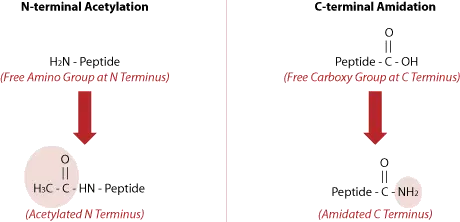
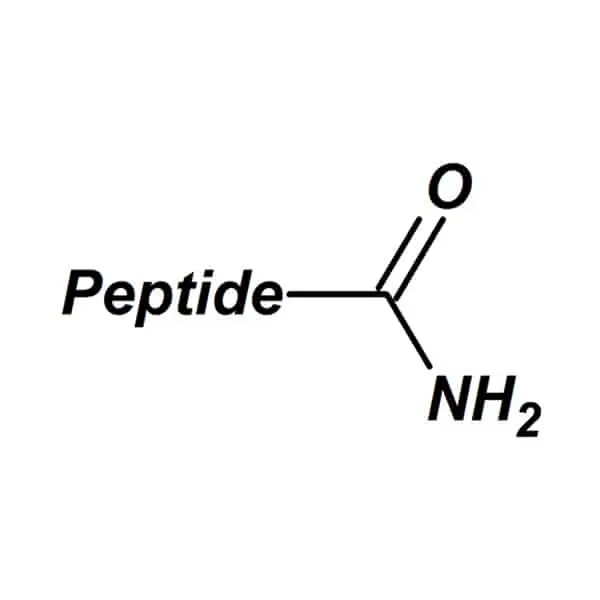
C-terminal amidation is a critical post-translational modification where the carboxylic acid group (-COOH) at a peptide’s C-terminus is converted to an amide group (-CONH₂). This seemingly minor chemical change profoundly impacts a peptide’s biological activityreceptor binding affinity, and metabolic stability. Researchers designing therapeutic peptides or biochemical probes must carefully weigh structural, functional, and physiological factors when deciding whether to be amidated.


Key Takeaways

  • C-terminal amidation neutralizes negative charge, enhancing receptor binding for most bioactive peptides.
  • Over 50% of peptide hormones (e.g., neuropeptide Y, oxytocin) occur naturally in amidated form.
  • Amidation improves proteolytic resistance by 30–60% compared to acidic forms.
  • Non-amidated peptides exhibit higher polarity, significantly reducing cellular permeability.
  • Synthesis requires specialized resins (e.g., Rink amide) or solution-phase modification.

Fundamentals of Peptide Amidation

Chemical Basis and Biological Prevalence

C-terminal amidation replaces the terminal carboxyl group with a carboxamide moiety, removing its acidic proton. This modification is enzymatically catalyzed in vivo by peptidylglycine α-amidating monooxygenase (PAM), which processes glycine-extended precursors into bioactive amidated peptides. Approximately 60% of neuropeptides undergo this modification, highlighting its physiological importance. Eliminating the negative charge induces conformational changes that optimize receptor-ligand interactions by reducing electrostatic repulsion.


Functional Consequences of Amidation

Enhanced Biological Activity

For peptides like neuropeptideshormones, and antimicrobial peptides, amidation dramatically boosts efficacy. This results from structural stabilization of bioactive conformations and improved membrane interactions.

Find out more about peptide synthesis here.

Improved Metabolic Stability

Amidation confers resistance to carboxypeptidases by eliminating the charged C-terminal recognition site. Reduced polarity also decreases renal clearance, extending systemic exposure.

Influence on Solubility and Aggregation

Charge neutralization increases hydrophobicity, which may reduce aqueous solubility but enhance membrane permeability—critical for CNS-targeting peptides crossing the blood-brain barrier. However, heightened hydrophobicity can increase aggregation propensity, requiring formulation adjustments.


Decision Framework for Amidation

Native Sequence Mimicry

Always replicate endogenous modifications when studying physiological systems. If the native peptide is amidated (e.g., substance P, vasoactive intestinal peptide), synthetic versions must match this to ensure bioequivalence.

Functional Domain Considerations

Evaluate the peptide’s active site topology: Amidation is essential if receptor binding involves C-terminal residues (e.g., opioid peptides). N-terminally active peptides (e.g., angiotensin) may tolerate C-terminal modifications. Computational modeling or alanine scanning data can guide this decision.

Physicochemical Optimization
For engineered peptides:

  • Amidate to boost proteolytic stability and membrane permeation.
  • Retain carboxylate to improve solubility or enable conjugation chemistry.
  • Consider alternative modifications (e.g., esterification) for intermediate properties.
Amidated

Synthesis and Characterization

Solid-Phase Synthesis Protocols

Amidated peptides require amide-functionalized resins (e.g., Rink amide MBHA resin) during Fmoc/tBu SPPS. Cleavage automatically generates the C-terminal amide. For solution-phase synthesis, use carbodiimide-mediated amidation with ammonium salts.

Analytical Verification
Confirm amidation via:

  1. Mass spectrometry: +0.984 Da mass shift vs. carboxylic acid form.
  2. Isoelectric focusing: Higher pI due to charge elimination.
  3. Reversed-phase HPLC: Increased retention time reflecting hydrophobicity.

Find out about high-speed RUSH synthesis.


Frequently Asked Questions (FAQ)

Does amidation affect peptide immunogenicity?

Generally no. Antibody recognition depends on epitope conformation, not C-terminal charge. Exceptions exist for antibodies targeting extreme C-termini.

How does amidation cost compare to standard synthesis?

LifeTein can provide amindation at no additional cost to the synthesis.

Is amidation reversible in biological systems?

No. Unlike acetylation or phosphorylation, amidation is a permanent modification with no known mammalian reversal enzymes.
Should I Have TFA Removed from My Peptide?

TFA

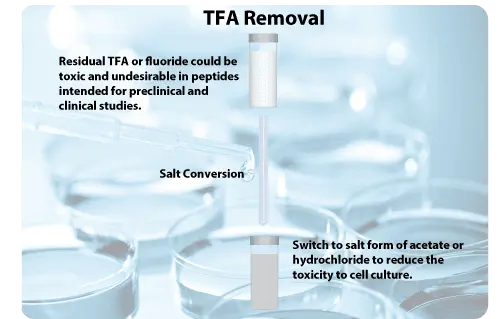
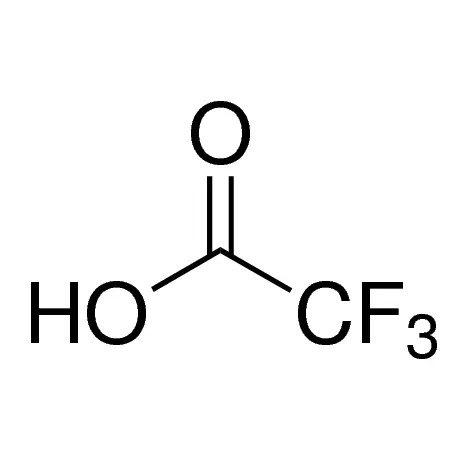
Trifluoroacetic acid (TFA) is ubiquitous in peptide synthesis, serving as a cleavage reagent during solid-phase synthesis and as an ion-pairing agent in HPLC purification. Consequently, synthetic peptides are typically delivered as TFA salts. While TFA facilitates high-purity peptide production, its presence as a salt can profoundly compromise experimental outcomes and biological activity. The decision to remove TFA hinges on your peptide’s intended application, sequence properties, and sensitivity requirements.


Key Takeaways

  • Residual TFA alters peptide structure and function by binding to positively charged residues, potentially modifying mass, solubility, and secondary structure.
  • TFA is cytotoxic at nM concentrations, interfering with cell proliferation, receptor binding, and enzymatic activity in biological assays.
  • HCl exchange is the gold-standard removal method, replacing TFA counterions via iterative lyophilization in hydrochloric acid.
  • Critical applications like cellular assays, in vivo studies, or API development mandate TFA levels <1%.
  • TFA sensitivity varies; hydrophilic peptides or those with cationic residues (Arg, Lys, His) bind TFA more tightly, necessitating aggressive removal.

Biological Assay Interference: A Primary Concern

Cytotoxicity and Cellular Dysregulation

TFA exhibits dose-dependent cytotoxicity, disrupting membrane integrity, inhibiting cell proliferation, and triggering apoptosis at concentrations as low as 10 nM. For cell-based assays—especially those measuring viability, signaling, or metabolism—TFA removal is non-negotiable.

Enzymatic and Receptor Binding Interference

The strong acidity of TFA (pKa 0.23) can denature pH-sensitive proteins or enzymes, leading to false-negative results in kinetic assays. Additionally, TFA competes with phosphate groups in binding sites, potentially inhibiting kinases, phosphatases, or ATP-dependent enzymes. For studies probing enzyme-substrate interactions or receptor-ligand binding, TFA levels should be reduced below 1% using professional exchange services.


TFA

Structural and Functional Consequences of TFA Retention

Altered Peptide Conformation and Solubility

TFA binds tightly to free amino termini and side chains of cationic residues (e.g., Arg, Lys, His), forming stable counterion complexes that distort secondary structures like α-helices or β-sheets. This binding can reduce solubility in aqueous buffers and promote aggregation, particularly in hydrophobic sequences. For structural biology applications (e.g., NMR, crystallography), TFA removal ensures native folding and minimizes artifacts.


Applications Dictating TFA Removal

In Vivo Studies and Therapeutic Development

For peptides intended for animal studies or clinical use, TFA poses safety and efficacy risks. Its toxicity profile includes organ toxicity and immunogenicity, potentially invalidating preclinical data. Regulatory guidelines for Active Pharmaceutical Ingredients (APIs) require TFA levels <0.1%, necessitating rigorous removal protocols like LifeTein’s TFA Salt Exchange.


Practical Removal Methodologies

HCl Exchange Protocol

LifeTein’s optimized protocol replaces TFA with HCl through iterative dissolution and lyophilization:

  1. Dissolve peptide in distilled water (1 mg/mL) or phosphate buffer.
  2. Add 100 mM HCl to achieve 2–10 mM final concentration.
  3. Incubate 1 minute at room temperature.
  4. Flash-freeze in liquid nitrogen.
  5. Lyophilize overnight, then repeat dissolution in HCl and lyophilization twice.
  6. Resuspend in target buffer at 2 mg/mL.
    Note: Concentrations <2 mM HCl yield incomplete exchange, while >10 mM risks peptide modification.

Professional TFA Exchange Services

For stringent requirements (e.g., <1% TFA), specialized services like LifeTein’s TFA Salt Exchange replace TFA with acetate, formate, or HCl. This approach is recommended for hydrophilic peptides or complex sequences where DIY methods fail.


Decision Workflow: When to Remove TFA

Evaluate your experimental needs using this framework:

  • Remove TFA if: Conducting cellular assays, in vivo work, structural studies, or MS quantification.
  • Tolerable if: Using peptides for polyclonal antibody production or non-quantitative Western blotting.

Frequently Asked Questions (FAQ)

Can I use acetate instead of HCl for TFA exchange?

Yes. Acetate or formate salts are less acidic alternatives, though HCl offers higher exchange efficiency for strongly cationic peptides.

Does lyophilization alone remove TFA?

No. Lyophilization eliminates unbound TFA but not counterions bound to peptide residues. HCl exchange or HPLC desalting is essential for bound TFA.

Are TFA-free peptides more expensive?

Yes. Salt conversion services incur 20–30% higher costs due to peptide loss during purification and additional reagents.